

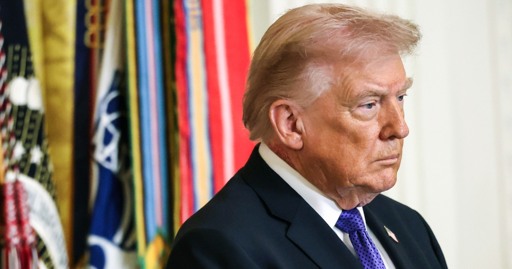
Trump won the presidency in 2016 and 2024 thanks in no small part to campaigning against the long and draining wars of his predecessors. Now, he’s started a war of his own.
Trump won the presidency in 2016 and 2024 thanks in no small part to campaigning against the long and draining wars of his predecessors. Now, he’s started a war of his own.
Republicans know their shit ain’t popular.
The problem was neoliberals also aren’t popular.
So everyone spent 50 years voting against what they wanted to happen least, instead of ever getting to vote for what they want.
It’s a consequence of Ordinal voting methods, particularly First Past the Post.
Arrow’s Impossibility Theorium spells it out. https://electowiki.org/wiki/Arrow’s_impossibility_theorem
The tldr is that any ranked voting system will result in two parties.
This is really because all ranked voting systems are built around the word “Or”.
You support A or B. Which means that A and B have incentive to demonize each other, because every vote for A is one less potential vote for B.
The solution is abandoning Ordinal voting for a Cardinal system.
The simplest method is Approval.
Another option is STAR.
www.starvoting.org
It’s been deliberately designed to make for better election results.
This is not a normal result…
You’re falling for the propaganda from the same two groups who colluded to ensure there would never be a third.
And it took them generations to keep people to believe that. I understand you’re trying to argue we should change it, and we should.
But just like capitalism doesn’t have to be this bad, neither does a first past the post system, or even a two party system.
They’ve convinced you the only way to fix things is a complete overhaul, knowing that a significant amount of a human population would never support that no matter how bad shit gets.
Fuck man, we essentially fixed the two party system a year ago. And no one even noticed.
They want to set the bus on fire after we finally put it in reverse and started backing away from the cliff. The bus was never the problem, letting Liverne and Shirley set the course was.
I’m falling for the mathematical truth.
We’ve known that Ordinal voting was bad since the 1780s, The Mathematician, philosopher and Girondian, Marie Jean Antoine Nicolas Caritat, the Marquis de Condorcet, wrote the seminal work on it; Essay on the Application of Analysis to the Probability of Majority Decisions (Essai sur l’application de l’analyse à la probabilité des décisions rendues à la pluralité des voix). Found here in the original French
We haven’t fixed anything, because the voting method itself is broken. In any First Past the Post election, you have the Spoiler Effect, where just a few votes for a third party can guarantee that the person furthest from that candidate on the political spectrum wins. Look at Ross Perot securing Clinton’s win in 1992 and Ralph Nader securing Bush’s win in 2000.
None of that shit is fixed because we’re still using the broken system, a system that wasn’t actually ever really designed as such, it was just the default easiest way to do things and enables minority rule.
No, that’s only after two parties have normalized and aren’t running primaries representative of their voters desires in a candidate…
It doesn’t matter what someone said 250 years ago.
Like, what kind of ancestor worship does it take to think that could have been the end all discussion, and what kind of nativity does to think to not realize society has changed drastically since?
People didn’t stop discussing this, and shit didn’t stop changing.
Stop ready classical literature and at least get to the 20th century if not the 21st.
Oh, you want 20th century again? You didn’t like it in my original comment, but back to Arrow’s Impossibility Theorem, proven definitively in 1950.
Then a bit later, this important part;
The Spoiler Effect is when a voting system fails independence of irrelevant alternatives. This is what drives two party dominance, after all, if you’re punished for voting third party, third parties become actively harmful. This is why the major support for most third parties comes from their ideological opponents. Jill Stein being super cozy with Russia and Republican donors being the key recent example.