There has been a long-established principle of the law of the sea that allows free passage through things like the Strait of Hormuz. While this principle has been around since… I think the 1800s but I’m not 100% sure, its most recent incarnation is enshrined in the United Nations Convention on the Law of the Sea (UNCLOS).
So Iran wasn’t “playing nice”, they were playing by the rules.
Donald Trump has repeatedly shown that he doesn’t care about the rules. By going to war with Iran, he then gives them permission to also defy the rules. Iran will say: “We’ll follow the rules when the US does”.
N.B. Yes, it’s really called “the law of the sea”, maritime law is also a thing but a different thing
Did the law somehow change to allow them to now charge fees? Or, were they playing nice by following a law that has no real enforcement behind it? What will we do? Sanction them?
The war didn’t start because they were charging fees, they weren’t. They started charging fees because of the war.
UNCLOS has specific enforcement mechanisms behind it. I don’t know enough detail to know what they are, but yes, it’s founded on an international treaty. My point was Iran wasn’t doing it out of the goodness of their hearts, but because they got something in return: on UNCLOS specifically they get free passage for their own ships in others’ territorial waters. More broadly, they get the stability of the post-WWII international order.
The US has turned its back on that international order by attacking Iran. Therefore the incentive for Iran to participate in that order has greatly diminished.
If all international treaties are “playing nice”, then fine, they were playing nice. I prefer to see them as a mutually beneficial exchange. We’re getting dangerously close to “laws are just threats” territory though, and I think that moves us away from a conversation whose definitions are useful for dialogue.

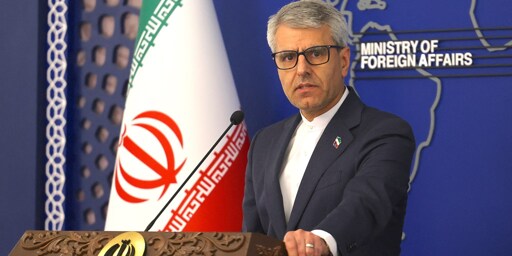
I’m surprised they didn’t before. Did they? Seems like they were playing nice until Dickless Donald fucked everything up.
I do wonder if the oligarchs would even allow Donald to run again, if he tried. I think not.
There has been a long-established principle of the law of the sea that allows free passage through things like the Strait of Hormuz. While this principle has been around since… I think the 1800s but I’m not 100% sure, its most recent incarnation is enshrined in the United Nations Convention on the Law of the Sea (UNCLOS).
So Iran wasn’t “playing nice”, they were playing by the rules.
Donald Trump has repeatedly shown that he doesn’t care about the rules. By going to war with Iran, he then gives them permission to also defy the rules. Iran will say: “We’ll follow the rules when the US does”.
N.B. Yes, it’s really called “the law of the sea”, maritime law is also a thing but a different thing
International law is mostly honor system, no?
Did the law somehow change to allow them to now charge fees? Or, were they playing nice by following a law that has no real enforcement behind it? What will we do? Sanction them?
The war didn’t start because they were charging fees, they weren’t. They started charging fees because of the war.
“Playing nice” is a good way to describe it.
UNCLOS has specific enforcement mechanisms behind it. I don’t know enough detail to know what they are, but yes, it’s founded on an international treaty. My point was Iran wasn’t doing it out of the goodness of their hearts, but because they got something in return: on UNCLOS specifically they get free passage for their own ships in others’ territorial waters. More broadly, they get the stability of the post-WWII international order.
The US has turned its back on that international order by attacking Iran. Therefore the incentive for Iran to participate in that order has greatly diminished.
If all international treaties are “playing nice”, then fine, they were playing nice. I prefer to see them as a mutually beneficial exchange. We’re getting dangerously close to “laws are just threats” territory though, and I think that moves us away from a conversation whose definitions are useful for dialogue.