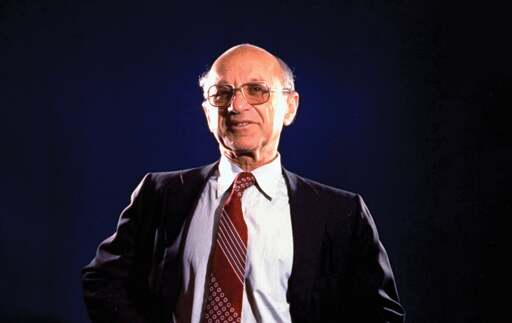
Much of what plagues our society today and fueled the rise of Donald Trump can be traced to the theories of two giants in the field of economics, the so-called “dismal science”—Friedrich Hayek and Milton Friedman. They actually didn’t refer to themselves as neoliberals, preferring the term “neoclassical liberals.” A difference without a distinction, perhaps.

It’s impossible to separate Friedman from his early mentor and supporter Hayek. Their early mentor-mentee relationship evolved over time to a respectful intellectual rivalry, but they would be forever linked through the economic society Hayek formed and Friedman later helmed.

Moreover, it’s equally impossible to separate either of them from their chosen antagonist, John Maynard Keynes—the man they supplanted in the halls of academia and power.

But Friedman’s penchant for media, outsized personality, and army of disciples have made him the avatar of neoliberalism, the economic theory that dominated U.S. politics for the past half century.

  • Basic Glitch@sh.itjust.worksOP
    link
    fedilink
    arrow-up
    2
    arrow-down
    2
    ·
    edit-2
    11 hours ago

    Quinn Slobodian’s recent book Hayek’s Bastards traces precisely how those racial and civilizational anxieties became fused to free market doctrine—a lineage that runs from Mont Pèlerin through the Heritage Foundation through to the ideological infrastructure of the contemporary far right.

    Hayek’s Bastards: Race, Gold, IQ, and the Capitalism of the Far Right Quinn Slobodian

    To defy demands for equality, many neoliberals turned to nature. Race, intelligence, territory, and precious metal would be bulwarks against progressive politics. Reading and misreading the writings of their sages, Friedrich Hayek and Ludwig von Mises, they articulated a philosophy of three hards—hardwired human nature, hard borders, and hard money—and forged the alliances with racial psychologists, neoconfederates, ethnonationalists, and goldbugs that would become known as the alt-right.

    Whether Hayek intended for his work to be used to justify white nationalist ideology, it is frequently cited by white nationalists to justify their beliefs.

    Friedman was not that. This distinction is critical, and this inquiry would be dishonest to collapse it. Milton Friedman was seemingly not a racist, although he was oblivious to the reality of how racial oppression works.

    I will say that it does feel disengenous to let Friedman off the hook like this. There’s being truly oblivious, and then there’s being fully aware of the evils your work is being used to justify, yet choosing to pretend over and over again, the ends will simply justify whatever means are necessary.

    https://www.thenation.com/article/archive/the-chicago-boys-in-chile-economic-freedoms-awful-toll/

    This particularly convenient concept of a social system in which “economic freedom” and political terror coexist without touching each other, allows these financial spokesmen to support their concept of “freedom” while exercising their verbal muscles in defense of human rights.

    The usefulness of the distinction has been particularly appreciated by those who have generated the economic policies now being carried out in Chile. In Newsweek of June 14, Milton Friedman, who is the intellectual architect and unofficial adviser for the team of economists now running the Chilean economy, stated: “In spite of my profound disagreement with the authoritarian political system of Chile, I do not consider it as evil for an econ­omist to render technical economic advice to the Chilean Government, any more than I would regard it as evil for a physician to give technical medical advice to the Chilean Government to help end a medical plague.”

    https://www.ineteconomics.org/perspectives/blog/why-mislead-readers-about-milton-friedman-and-segregation

    My paper was clear that we do not know exactly how much Milton Friedman knew of these plans when he wrote the 1955 case for vouchers that spawned today’s “school choice” movement. But we know for sure that, to promote his views, he decided to exploit the southern campaign.