

Every week, millions of Christians gather to worship and remember the tenets of the faith: belief in God, in Jesus Christ as his son and their savior, and in the Holy Spirit. Many utter the words of the Lord’s Prayer each week, and in doing so, ask that God forgive our sins, as we forgive those who trespass against us.
These are the ABCs of the Christian faith — and they should theoretically be an easy answer to offer if, like President Donald Trump, you’re asked what might happen when you die, and what you might do when Judgment Day comes.
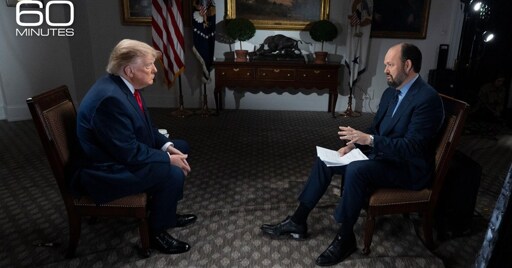
And yet, when asked last week by Ross Douthat on 60 Minutes where Trump thinks he’ll go when he dies — and if he could forgive his political enemies if his salvation depended on it — Trump was brutally honest.
“Well, I’m a religious person, so in theory I go to heaven,” the president said. “I hope so. I don’t want to go to hell.”
Could he forgive opponents like former FBI Director James Comey and former House Speaker Nancy Pelosi?
“Well, then I wouldn’t be real, would I? I mean, if I said to you, sure, the easy answer to that is ‘Oh, yes, I could forgive,’” Trump told Douthat. “The answer is no. I want to be honest, no.”
Even if God asked it?
“Before the judgment, no,” he said. “I do hate some of my enemies…I probably cannot do that, no, because I do hate some of my enemies and I always will.”
Yes.
They’re the ones who help their neighbours, treat immigrants with respect, don’t hoard wealth beyond what they’ll conceivably ever need.
… and keep their faith to themselves.
Have you read the Bible? I would really say proselytizing is a disqualifier for being christian
To some extent. You’re probably referencing the Sermon on the Mount, though (Matthew 5 and 6, including the bits about praying in private and not making a display of your faith), and that wasn’t exactly a private affair.