

There’s a really important New York Times article from two days ago which describes the scale of destruction inside Iran. Across every kind of civilian and military infrastructure, estimates range from $300 billion to $1 trillion in damage. A lot of that damage is to heavy industry infrastructure at the core of the nation’s economy. Already before this war the Iranian economy was teetering, with out-of-control inflation and currency collapse. This winter’s demonstrations in Iran, which triggered such a ferociously brutal crackdown, were certainly broadly against the regime and its repressions. But they were also specifically a response to the collapsing economy. Now that all seems infinitely worse.
The Times article even suggests the strong possibility the present government isn’t equipped to inventory the scale of the damage. Iran’s “mosaic” strategy, in which local military units are given autonomy to act without central control, in order to make the state’s defense more resilient, may be great in military extremity. But it’s not great for running a state or economy. The best reporting suggests that the government of Iran is now pretty much entirely in the hands of the Islamic Revolutionary Guard Corps. That’s great as a force of domestic repression to keep the regime in place. But Iran is now facing a crisis that requires bureaucrats, civil engineers, economists.
What all of this means, I think, is that when Iran demands the return of all its frozen assets and an end to all sanctions, that may not be a bluff. It may be totally unrealistic. But it may not be a bluff. The regime’s survival may simply not be compatible with the kind of economic calamity the country now faces. So they may really need that money and that access to the global economy.
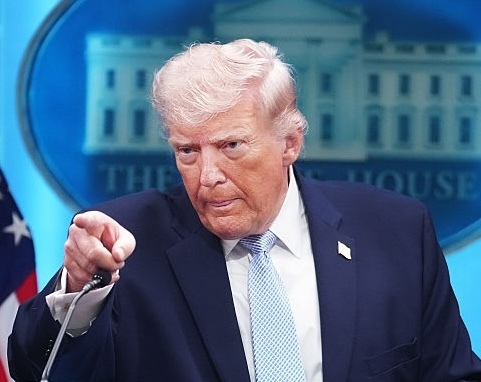
In some ways, the best angle for the Trump White House would simply be to pull back and allow Iran to simmer in this destruction. The regime may not be able to survive it. But of course Trump can’t do that because they need the Strait of Hormuz open. It may not be existential for the U.S. But it’s certainly existential for Donald Trump’s political future.
That remains to be seen. The Iranians are in this position in no small part because they failed to form alliances and negotiate defense agreements with its major territorial neighbors. For all we know, they’re the same guys, failing upwards just like our dipshit diplomats did.
They’ve been bombed to shit. Tens of thousands of Iranians are dead. Their economy is in tatters. Their civilian population is in dire straights. Another drought could kick off a nation-wide famine.
Their military has demonstrated a degree of resilience and aptitude the Americans didn’t count on. But their nation is seriously fucked, with an enormous slate of repairs needed to recover from all the bombings and trade sanctions that make it almost impossible to bring in the resources necessary for that kind of recovery.
The US loses wars every couple of years and comes through just fine. Our domestic economy isn’t the one getting peppered with high explosives.
Meanwhile, the Bipartisan Epstein Coalition is fully behind collapsing the entire Iranian civilization and re-colonizing it in order to extract their natural resources at maximum profit. Just like with our war in Iraq, we have a long term pathway towards pillaging their country indefinitely. They have a short term pathway towards resisting our imperial juggernaut.
They absolutely should demand assets be returned. The US can just ignore those demands and weather the marginal increase in global costs, while the Iranian civilization collapses from its mortal wounds.