

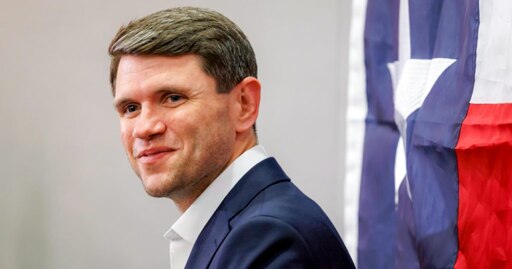
AI use in political ads is largely regulated at the state level, but there are still concerns about how they can mislead voters.
At least 15 campaign ads featuring AI-generated content have run since November, stoking concerns that the now-ubiquitous technology could cause confusion or even mislead voters ahead of the 2026 midterm elections.
In state, local and federal elections across the country, AI has been everywhere from school board campaigns to governor’s races, used to enhance speech, turn politicians into cartoons or, in one notable case in Massachusetts, mimic a rival politician’s voice.
In the state’s gubernatorial race, the campaign of Republican primary candidate Brian Shortsleeve created an AI-generated radio ad that sounds like Democratic Gov. Maura Healey, using Healey’s “voice” to say things she never actually said, including about the state’s economy. The clip does not contain an explicit AI disclaimer, and instead the caption says it’s what her radio ads would sound like “if she was honest.” Shortsleeve’s campaign has also released AI-generated videos depicting Healey as the Grinch and another of her hissing with red eyes, neither of which contained explicit AI disclaimers.
Who could have ever predicted such a thing 🫢
