

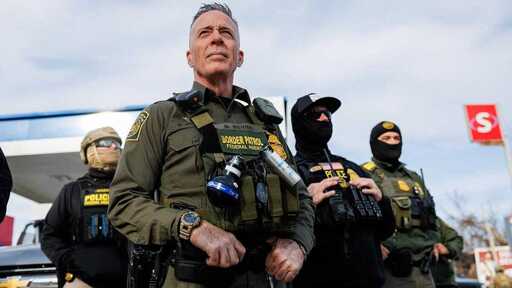
Overall, as someone who has been covering this for months, I am struck by how angry homeland security officers with their own agencies, and their blunt dismissal of the Washington leadership. All of the immigration officers I interviewed for this story, spoke on the condition of anonymity.
Sagging morale and declining standards are a constant theme I picked up, problems that these sources say have been festering long before the deaths of Pretti and Renee Good (and ones that very much contributed to these outcomes).
More than one ICE agent in particular complained about how Washington’s focus on labeling protestors as “impeding” federal functions (and thus breaking the law), and the vilification of “Antifa” and others labeled paid agitators, leftists, radicals, extremists, and terrorists is confusing the ranks while also distracting everyone from the immigration enforcement mission.
“I can go on and on but overall it’s been a ridiculous experience,” one ICE agent told me. He says that many agents on the ground are just going along with the expanded mission because they are more interested in their away-from-home per diem pay and collecting overtime than whatever the mission is.
Others express the cynicism typical of everyone who toils at the bottom of any bureaucratic food chain, pooh-poohing rapid expansion of the ICE army and shaking their heads over the ridiculous budget increases being fought for in Washington that will have no impact where they work.
“The brand new agents are idiots,” an experienced ICE agent assigned to homeland security investigations told me. This same sentiment was echoed by virtually everyone I talked to, with several conveying the view that Pretti’s death was the fault of some skittish young recruit who panicked when he heard the word “gun” (if that’s what happened).
Even one of the new ICE recruits agreed with the experienced agent’s low assessment of the Trump freshman class. “A lot of the guys,” he said, referring to the new ICE recruits he worked alongside, “are honestly pretty sketchy.”
The new ICE officer continued: “I thought federal agents were supposed to be clean cut but some of them pass around a flask as we are watching a suspect,” observing as well that the new guys “have some weird tattoos.”
Those tattoos, I’m told, are symbolic of the fact that the new recruits tend to be more ideologically motivated than those of the past. This problem is compounded by the fact, raised by several officers, that ICE is relying on volunteers to go to Minneapolis and other Democratic cities on these temporary deployments. This tends to favor new recruits and those who are chasing overtime pay.
It is unclear how these task forces are organized in cities like Minneapolis or indeed “who” is in charge and in control, but those who I interviewed agree that the tide is turning, that some agencies (like the FBI) are increasingly no shows in the field, and others are expressing a reluctance to participate in non-immigration missions.
“Last I heard,” says one ICE officer, “FBI didn’t want to help us out much anymore, especially in Minneapolis, due to the bad press.”
The “if you don’t like it, leave” crowd is complaining and not leaving.
Just quit ffs